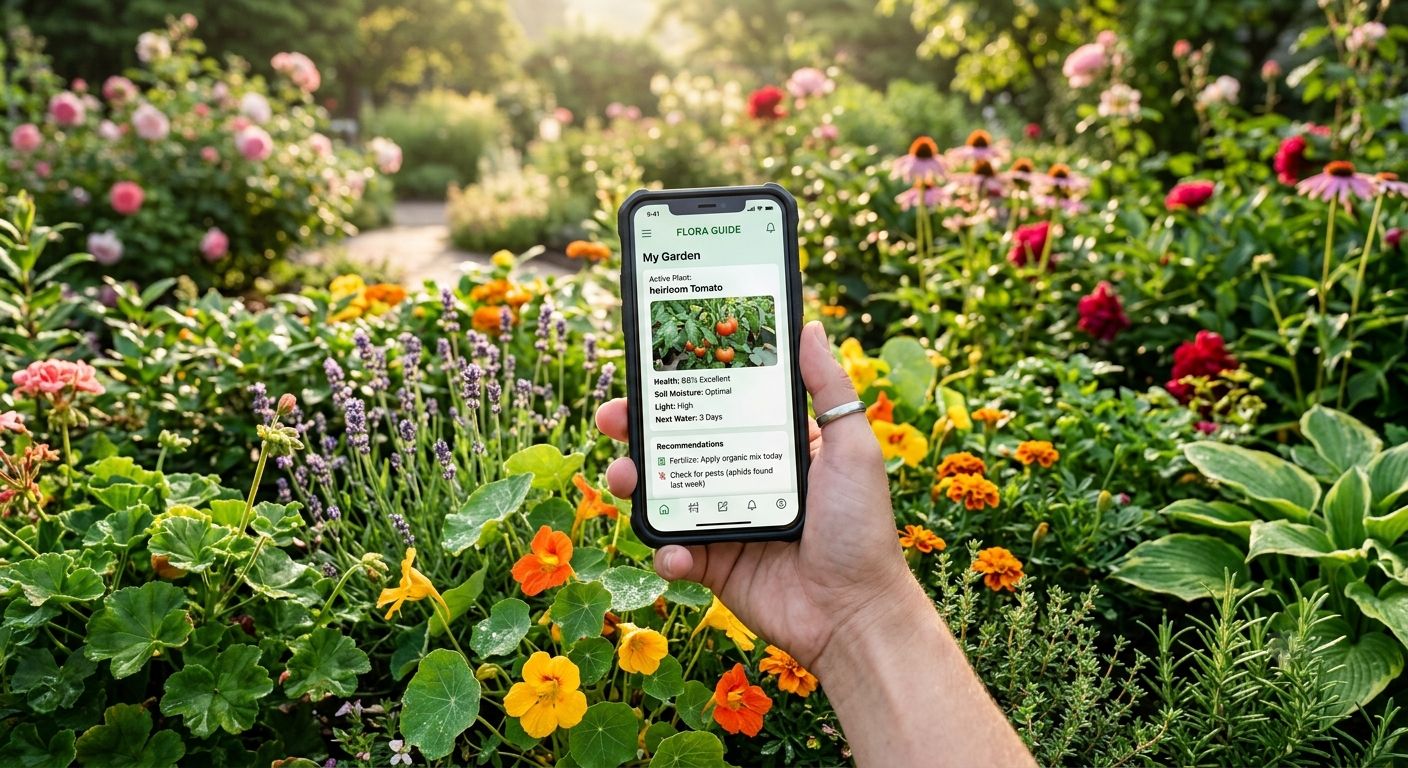
Whether you are trying to keep a finicky fiddle-leaf fig alive, mapping out a backyard vegetable patch, or treating a sudden case of powdery mildew, there’s an app for it. The best gardening tools focus on specific jobs: instantaneous identification, spatial planning, or custom care scheduling.
The top gardening apps are broken down by what they do best to help you choose the right digital companion for your soil.
The Best Gardening Apps by Category
| App | Best For | Platform | Price | Key Highlight |
|---|---|---|---|---|
| Growli | AI Gardening Assistant | iOS, Android | Freemium | Conversational multi-turn diagnosis & frost alerts |
| Planter / GrowVeg | Vegetable Garden Planning | iOS, Android, Web | Freemium to Paid | Grid-based layout mapping & companion planting guides |
| PictureThis | Rapid Plant Identification | iOS, Android, Web | Freemium | Massive database with highly accurate one-shot ID |
| Planta | Houseplant Care Schedules | iOS, Android | Freemium | Smart watering reminders based on pot size & light |
| Gardenly / iScape | Landscape & Garden Design | iOS, Android | Freemium to Paid | AR overlays and AI-driven photorealistic yard mockups |
1. Best for Day-to-Day Advice: Growli
If you want an app that understands your garden as a whole rather than diagnosing a single leaf in a vacuum, Growli is the standout conversational AI companion.
Why you need it: Instead of just spitting out a static wiki page, you can take a picture and chat casually about the context (“I noticed these spots after three days of heavy rain, what should I do?”).
The Best Feature: It tracks local weather patterns natively, pushing morning briefings and proactive frost alerts before cold snaps hit your zip code.
2. Best for Edible & Vegetable Gardens: Planter or GrowVeg
Layout is everything when growing your own food. Planter (great for mobile) and GrowVeg (excellent for web/desktop) take the guesswork out of spacing.
Why you need it: They utilize square-foot gardening grids to tell you exactly how many seeds fit in a specific plot size.
The Best Feature: Built-in companion planting logic. The apps flag conflicts in real time—warning you, for instance, not to plant your tomatoes next to potatoes to avoid shared pests.
3. Best for Pure Identification: PictureThis
If you routinely hike, forage, or look at a neighbor’s yard wondering, “What is that?”, PictureThis remains the undisputed king of visual search.
Why you need it: It boasts one of the largest consumer plant databases in existence. Point your camera at a flower, weed, or tree, and it gives you a confident ID in seconds.
The Catch: Its paywalls are famously aggressive. Keep the free version for quick IDs, but look elsewhere if you want customized ongoing care tracking.
4. Best for Houseplant Enthusiasts: Planta
Overwatering is the number one houseplant killer. Planta solves this with structured, highly organized schedules.
Why you need it: It builds an individual profile for every indoor plant, factoring in the specific species, pot material (terracotta dries faster than plastic!), and location.
The Best Feature: The built-in “light meter” uses your phone’s camera to measure the actual light intensity (lux) in a room, ensuring you don’t put a low-light fern in a scorching southern window.
5. Best for Visualizing a New Yard: Gardenly or iScape
Before you pick up a shovel and tear up your lawn, these apps let you preview the finished look using modern AI and Augmented Reality (AR).
Why you need it: Gardenly lets you upload a flat photo of your yard and returns a fully redesigned, photorealistic option based on your local climate. iScape uses AR to let you drag-and-drop physical 3D elements (like trees, pavers, or garden beds) right onto your lawn through your screen.
💡 Quick Tip: If you are strictly growing vegetables, download Planter. If you have a chaotic mix of houseplants and outdoor ornamentals and want active weather alerts, opt for Growli or Planta.
Leave a Reply