
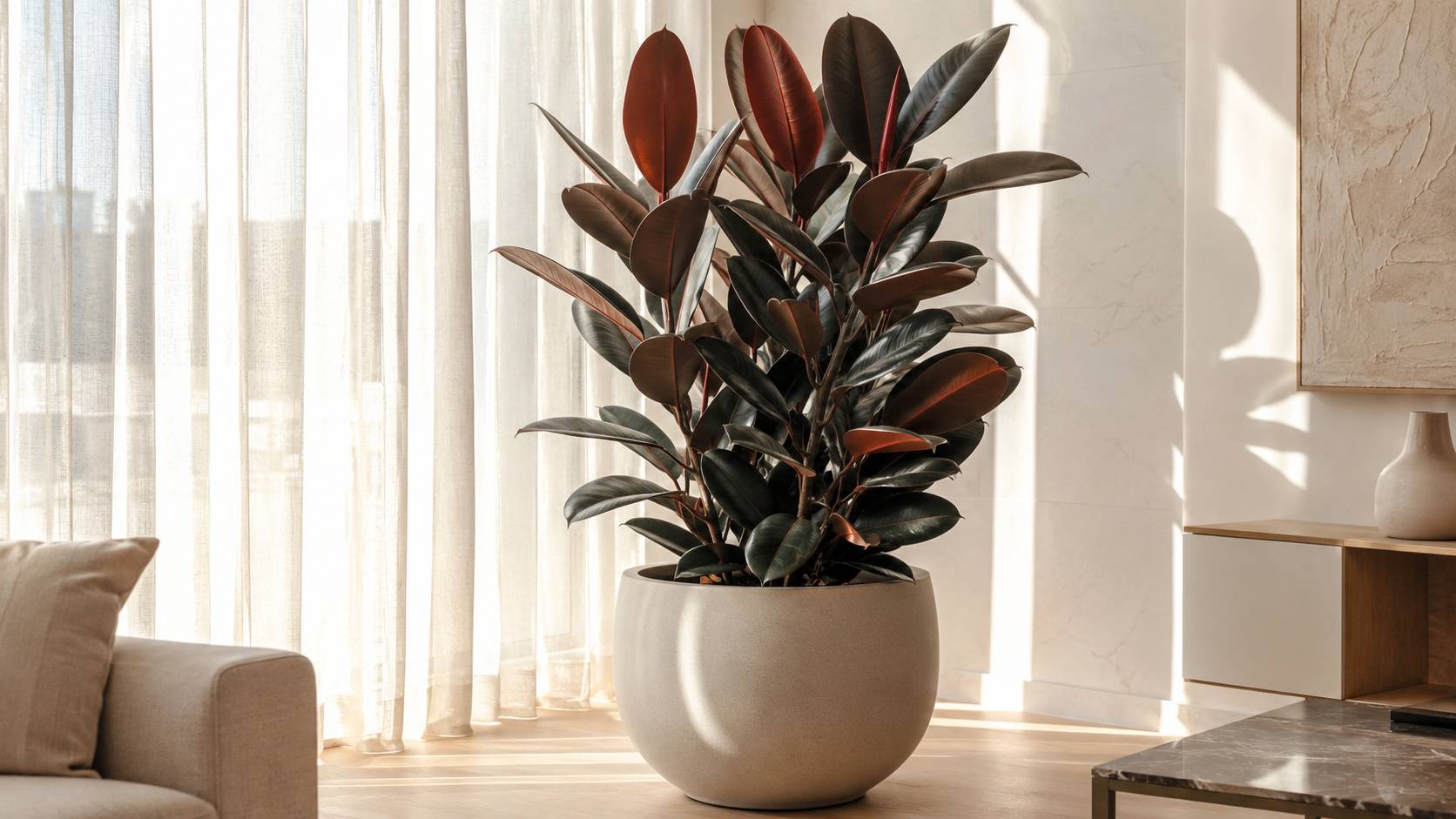
Nothing anchors an indoor plant collection quite like the glossy, larger-than-life leaves of a Rubber Plant. Ficus elastica pairs dramatic tropical looks with a famously forgiving nature, so whether you’re just starting your houseplant journey or you already have a jungle at home, this guide will help your rubber tree grow tall, healthy, and absolutely stunning.
What Makes Ficus Elastica So Special?
Native to the humid forests of Southeast Asia, Ficus elastica – also known as the rubber plant or rubber tree – can soar over 100 feet in the wild. Indoors, it matures into a manageable 6 to 10 feet of bold, upright beauty. Its thick, leathery leaves act like natural air filters while turning any corner into an instant focal point. Modern cultivars offer a palette ranging from near-black burgundy to creamy pinks, making it one of the most versatile statement plants available.
At-a-Glance Care Profile
| Feature | Details |
|---|---|
| Botanical Name | Ficus elastica |
| Common Names | Rubber Plant, Rubber Tree, Rubber Fig |
| Plant Type | Tropical evergreen, houseplant |
| Indoor Mature Size | 6–10 ft tall, 2–4 ft wide |
| Light Needs | Bright, indirect light; tolerates some morning sun |
| Watering | Allow top 2 inches of soil to dry between waterings |
| Soil | Well-draining, aerated mix with organic matter |
| Humidity | 40–60% (adaptable but thrives with extra humidity) |
| Temperature | 60–80°F (16–27°C); keep away from cold drafts |
| Feeding | Every 4–6 weeks during active growth |
| Toxicity | Toxic to cats, dogs, and humans if ingested |
5 Reasons You’ll Adore Growing a Rubber Plant
- Instant architectural impact – Those oversized, glossy leaves command attention in any room.
- Beginner-friendly toughness – Once you dial in its rhythm, this plant bounces back from occasional neglect.
- Surprisingly fast growth – With proper light, you can watch new leaves unfurl regularly during the growing season.
- Air-purifying powerhouse – Known to remove airborne toxins, contributing to a fresher indoor environment.
- Decades of companionship – A well-cared-for rubber plant can easily outlive trendy décor cycles and become a family heirloom.
Choosing Your Perfect Variety
Each rubber plant cultivar brings a distinct personality to your space.
- ‘Burgundy’ – Deep, wine-colored leaves with a waxy sheen; the emerging foliage blushes vivid crimson.
- ‘Tineke’ – A painterly mix of cream, sage green, and soft pink variegation that brightens darker corners.
- ‘Ruby’ – Similar to ‘Tineke’ but with bolder pink and red blushes, perfect for a pop of color.
- ‘Robusta’ – Classic forest-green leaves that grow larger and wider; exceptionally hardy.
- ‘Melany’ – A compact charmer with richly dark, slightly ruffled leaves, ideal for tabletops and shelves while young.
Light: The Secret to Lush, Upright Growth
Bright, indirect light is non-negotiable for a dense, vigorous rubber plant. Think of the dappled sunlight that filters through a rainforest canopy.
- Best spots: Directly in an east-facing window; pulled back 2–4 feet from a south- or west-facing window where curtains diffuse the afternoon sun.
- Watch for: Leggy stems, small new leaves, and lower leaf drop — all signs your plant is craving more light.
- Variegated varieties need brighter light to maintain their patterns; too little light can cause them to revert to solid green.
Rotate the pot a quarter turn each week to keep growth symmetrical and prevent leaning.
Crafting the Ideal Soil Mix
Rubber plants detest “wet feet.” Their roots need oxygen as much as moisture, so a chunky, well-draining mix is essential.
A simple, reliable blend:
- 2 parts high-quality indoor potting soil
- 1 part perlite or pumice
- 1 part orchid bark or coco coir chips
This combination holds enough moisture for hydration while allowing excess water to escape quickly. Always, always use a pot with drainage holes — terracotta can help wick away extra moisture for overwaterers.
Watering Wisdom: When and How Much
Overwatering is the #1 threat to rubber plants. Instead of a calendar, use your senses.
Water thoroughly when:
- The top 2 inches of soil feel dry to the touch (use your finger or a moisture meter).
- The pot feels surprisingly light when lifted.
- Leaves lose a tiny bit of their usual firmness (but don’t wait for dramatic drooping).
How to water: Slowly saturate the soil until water runs freely from the drainage holes. Empty the saucer after 30 minutes — never let the pot sit in water. In winter, reduce frequency as growth naturally slows.
Temperature and Humidity: Recreate the Tropics
Ficus elastica thrives in the same temperatures you enjoy — between 60°F and 80°F (16–27°C) . Sudden chills are its enemy.
- Keep plants away from drafty windows, exterior doors, and air-conditioning vents.
- Avoid placing them near radiators or heating ducts, which blast dry, hot air.
- While adaptable to average indoor humidity, leaves will grow larger and glossier with 50–60% humidity. A pebble tray, grouping plants together, or a small humidifier works wonders.
Feeding for Vibrant, Steady Growth
A hungry rubber plant shows its discontent with pale, slow-growing leaves.
- When: Fertilize every 4–6 weeks during spring and summer. If your plant pushes out new leaves in fall or winter under grow lights, you can feed lightly, but otherwise, let it rest.
- What: A balanced liquid fertilizer (e.g., 10-10-10 or 20-20-20) diluted to half strength. Organic options like fish emulsion or seaweed extract also work beautifully.
- Caution: Over-fertilizing leads to salt buildup and brown leaf edges. Flush the soil with plain water every few months to prevent this.
Pruning and Shaping Your Rubber Tree
Left unpruned, rubber plants tend to grow straight up with minimal branching. Strategic cuts create a fuller, bushier silhouette.
- Encourage branching: Cut just above a leaf node on the main stem; this typically stimulates one or two new shoots to emerge below the cut.
- Maintenance pruning: Remove any yellowing, damaged, or misshapen leaves regularly.
- Height control: Don’t be afraid to reduce the top growth — the plant responds well to rejuvenation pruning in spring or early summer.
Always use sterilized, sharp shears. The milky white sap can irritate skin, so gloves are a wise precaution.
Repotting: Room to Grow, Not Drown
Rubber plants prefer being slightly root-bound, but they still need a periodic upgrade.
Signs it’s time to repot (typically every 2–3 years):
- Roots coiling through drainage holes or circling the surface.
- Water zips through the pot without soaking in.
- Growth has stalled despite proper light and feeding.
- The plant becomes top-heavy and tippy.
Choose a new pot only 1–2 inches larger in diameter. Over-potting can lead to soggy soil and root rot.
Propagating Ficus Elastica: Easy Stem Cuttings
Multiply your collection or share with friends using this straightforward method.
- In spring or early summer, select a healthy stem with at least one leaf and a node.
- Using a clean blade, cut just below the node at a 45° angle.
- Remove the lowest leaf to expose the node, keeping one or two leaves at the top.
- Let the cutting callus in a warm, shady spot for 1–2 hours.
- (Optional) Dip the cut end in rooting hormone.
- Place the cutting in a jar of room-temperature water or directly into a small pot of moist, well-draining mix.
- Provide bright, indirect light and steady warmth. If in water, change it every few days.
- Roots typically appear within 4–8 weeks. Once roots are 1–2 inches long, pot up the cutting.
Troubleshooting Common Issues
| Symptom | Likely Causes | What to Do |
|---|---|---|
| Yellow leaves | Overwatering, poor drainage, cold shock | Check soil moisture, improve drainage, move plant |
| Brown, crispy edges | Dry air, underwatering, fertilizer salt | Increase humidity, water more evenly, flush soil |
| Leaf drop (lower) | Low light, draft, inconsistent watering | Move to brighter spot, stabilize temperature |
| Leaf drop (all over) | Sudden environment change | Allow plant to acclimate; avoid frequent moves |
| Stunted, pale growth | Insufficient light, nutrient deficiency | Boost light, begin gentle fertilizing in season |
| White crust on soil | Salt/mineral buildup from tap water | Flush soil thoroughly, use filtered water |
Keeping Pests at Bay
While resilient, rubber plants occasionally attract common houseplant pests.
- Spider mites: Fine webbing and stippled leaves. Wipe foliage with a damp cloth and apply neem oil or insecticidal soap.
- Mealybugs: White, cottony clusters in leaf joints. Remove with a cotton swab dipped in rubbing alcohol.
- Scale: Small brown bumps on stems and leaves. Scrape off gently and treat with horticultural oil.
- Aphids: Tiny green or black insects on new growth. A strong spray of water or insecticidal soap usually handles them.
Regularly dusting the large leaves not only keeps your plant breathing freely but also helps you spot problems early.
A Note on Toxicity
Ficus elastica contains a latex-like sap that can be irritating. According to the ASPCA, it is toxic to dogs and cats, potentially causing oral irritation, drooling, and vomiting if chewed. Keep plants out of reach of curious pets and children, and wear gloves when pruning to avoid skin irritation.
Styling Your Indoor Garden with Rubber Plants
The rubber plant’s clean lines and sculptural form make it a designer favourite.
- Living room anchor: Flank a sofa or media console with a pair of matching ‘Burgundy’ plants for symmetry.
- Empty corner drama: A tall ‘Robusta’ in a woven basket fills dead space instantly.
- Bright bathroom: If you have a window, the humidity helps a ‘Tineke’ thrive.
- Home office focus: A ‘Ruby’ behind your desk adds energy and a living, breathing focal point.
- Layered groupings: Combine with trailing plants like heartleaf philodendron or string of pearls for depth, and snake plants for contrasting upright texture.
Frequently Asked Questions
How fast does a rubber plant grow indoors?
In optimal conditions — bright, indirect light, consistent watering, and seasonal feeding — expect 12 to 24 inches of vertical growth per year until it reaches its indoor ceiling.
Can a rubber plant survive in low light?
It can survive, but it won’t thrive. You’ll notice spindly stems, larger gaps between leaves, and smaller foliage. A spot within view of a bright window is best.
Why are the bottom leaves of my rubber plant turning yellow and dropping?
This is often normal aging if it’s just an occasional lower leaf. Rapid or multiple leaf loss points to overwatering, cold drafts, or a sudden drop in light.
Should I mist my rubber plant?
Misting provides a brief humidity boost but isn’t a long-term solution. Instead, use a humidity tray or a room humidifier. Misting can also help keep leaves dust-free if done with distilled water.
How do I get my rubber plant to branch out?
Pinching or pruning the growing tip will usually activate dormant buds lower on the stem, encouraging branching. Notching (making a small cut above a node) can also stimulate a new shoot, though results can be less predictable.
When should I repot my rubber plant?
Repot in spring or early summer every 2–3 years, or when roots are clearly crowded. Avoid repotting in fall or winter when growth naturally slows.
The Last Leaf
With its polished good looks and uncomplicated care routine, Ficus elastica earns its place as an indoor garden classic. Provide it with the right light, a restrained watering hand, and a little attention to its seasonal rhythms, and you’ll be rewarded with a thriving, majestic companion that grows right alongside you. Whether you choose the moody elegance of ‘Burgundy’ or the joyful splash of ‘Tineke’, your rubber plant is ready to steal the show.
Leave a Reply